
 By James William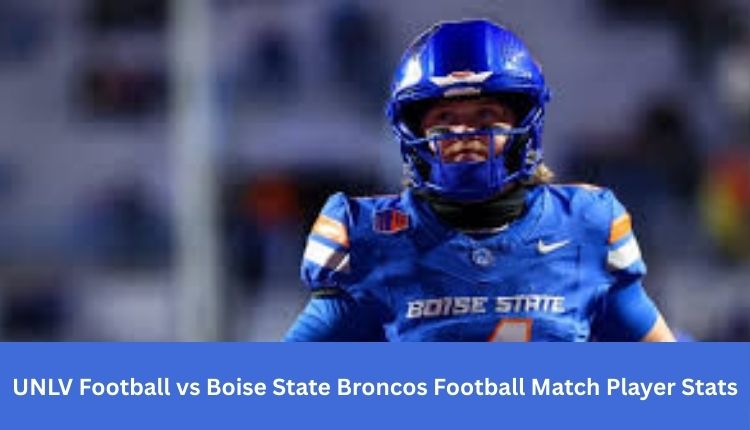
Both programmes feature contrasting football philosophies, competitive conference ambitions and talented rosters capable of producing exceptional individual performances. This article provides an in-depth statistical and tactical analysis of the UNLV football vs Boise State Broncos football match player stats, focusing on player contributions, team strategies, and performance trends that defined the competition.
- Team overview and match context
- Analysis of quarterback performance
- Triggering postbacks and rushing efficiency
- Wide receivers and their impact on the game
- Defensive position and UNLV football vs Boise State Broncos football match player stats
- Special teams performance and hidden yardage
- Coaching decisions and UNLV football vs Boise State Broncos football match player stats
- Overall Match Player Stats Comparison
- Conclusion
- FAQs
Team overview and match context
UNLV football vs Boise State Broncos football match player stats gain more meaning when viewed in the larger context of each team’s season and football identity. Boise State entered the game with a reputation for a disciplined offence and developing an elite quarterback, while UNLV showcased a rapidly improving programme based on speed, adaptability and aggressive play.
UNLV’s offensive scheme emphasized pace and spread formations, forcing Boise State to adjust its defensive alignment throughout the game. Boise State, on the other hand, relied on its balanced offensive approach, combining a controlled passing game with consistent rushing attempts to dominate time of possession.
Key pre-match factors that affect player stats include:
- Conference pressure for placement and postseason implications
- Injury reports affecting key starters
- Weather and terrain conditions affecting flyby accuracy
- Coaching adjustments based on previous matches
Both teams showed strong motivation, leading to high snaps for starters and meaningful contributions from rotation players. Game context enhanced individual performances, particularly among quarterbacks, wide receivers and defensive leaders.
Analysis of quarterback performance
Quarterbacks played a central role in shaping the stats of the UNLV football vs Boise State Broncos football match player stats, as both teams leaned heavily on their signal callers. The UNLV quarterback showed impressive mobility, extending plays and creating opportunities under pressure. His ability to scramble has forced Boise State’s defensive line to abandon tight coverage and open up throwing lanes downfield.
The Boise State quarterback showed precision and football intelligence. He consistently made the right reads, took advantage of coverage mismatches and avoided costly turnovers. His completion percentage reflected disciplined mechanics and strong chemistry with his receivers.
Key quarterback statistics include:
- Passing yards exceeding season averages
- Touch-to-catch efficiency
- Third-order conversion successful
- Execution rate in the red zone
The UNLV quarterback contributed significantly to the total offensive yards, while the Boise State quarterback ran the game efficiently and minimised the risk. These contrasting styles added depth to the players’ statistics and illustrated how quarterbacks’ decision-making directly affects the team’s overall performance.
Triggering postbacks and rushing efficiency
The ground game was another critical factor in the player statistics of the UNLV football vs Boise State Broncos football match player stats, with running backs from both teams playing complementary roles. Boise State’s rushing attack focused on physicality, using zone runs and power concepts to wear down UNLV’s defensive front.
UNLV relied more on speed and misdirection, incorporating draw plays, outside runs and quarterback options to generate rushing yards. Their running backs showed excellent vision, finding gaps and turning short gains into explosive plays.
Notable performance indicators include:
- Yards Per Carry Efficiency
- The explosive will fly over 20 yards
- Rush landing inside the red zone
- Pass blocking efficiency
Boise State’s running back rotation allowed consistent pressure on the defence, while UNLV’s versatile backs contributed as both rushers and receivers. These quick stats highlight how offensive balance has affected possession and scoring opportunities.
Wide receivers and their impact on the game
Wide receivers were instrumental in shaping the UNLV football vs Boise State Broncos football match player stats, especially in high-leverage situations. UNLV’s receivers excelled at creating separation with quick routes and athletic footwork, allowing the quarterback to release the ball quickly against pressure.
Boise State’s receiving corps emphasized discipline and route timing, executing intermediate and deep patterns with precision. Their receivers consistently gained yards after the catch and turned routine completions into momentum-shifting plays.
Key revenue metrics include:
- Total receptions and reception yards
- Yards After Catch (YAC)
- Successful reception in the third row
- Landings and targets in the red zone
Both teams have shown depth at the receiver position, with secondary targets stepping up on critical drives. These player statistics reflect the importance of chemistry, route execution and situational awareness in modern college football offences.
Defensive position and UNLV football vs Boise State Broncos football match player stats
Defence played a decisive role in the statistics of the UNLV football vs Boise State Broncos football match player stats, as both teams posted impressive individual performances. Boise State’s defence focused on disciplined gap control and zone coverage, limiting explosive plays while forcing UNLV into longer drives.
UNLV’s defensive unit relied on aggression and blitz packages, creating pressure and forcing rushing throws. Linebackers and defensive backs were especially active, contributing to tackle numbers and pass deflections.
Defensive performance indicators included:
- Total tackles and solo tackles
- Addresses losses and sacks
- Pass breakups and interceptions
- Quarterback pressures
Defensive statistics reveal how the momentum shifted throughout the game, with timely stops and turnovers preventing scoring. Individual defensive leadership proved to be the defining factor of the game.
Special teams performance and hidden yardage
Special teams often determine field position, and the UNLV football vs Boise State Broncos football match player stats highlight their importance. Boise State’s special teams unit showed consistency in kickoff coverage and punt execution, minimizing return distance.
UNLV countered with aggressive return strategies and attempted to generate explosive plays through speed and blocking schemes. Football players from both teams handled pressure situations and converted field goals, which kept the game competitive.
Key special teams metrics included:
- Kickoff and punt return averages
- Field goal accuracy
- Net punting yards
- Coverage deals
These stats highlight how special teams contribute to hidden yardage and affect the offensive starting position and scoring efficiency throughout the game.
Coaching decisions and UNLV football vs Boise State Broncos football match player stats
The coaching strategy significantly affected player statistics in the UNLV football vs Boise State Broncos football match player stats. Boise State emphasized clock control in the second half, reducing UNLV’s offensive possessions and protecting its defensive unit.
UNLV’s coaching staff adjusted defensive alignments and offensive play selection, attempting to exploit Boise State’s coverage tendencies. These tactical shifts influenced individual player usage and statistical output.
Coaching-driven statistical outcomes included:
- Play-calling distribution between run and pass
- Defensive substitution patterns
- Fourth-down decision success rates
- Timeout and clock management efficiency
The ability to adapt mid-game directly shaped player stats and overall game flow, highlighting the strategic chess match between coaching staffs.
Overall Match Player Stats Comparison
When reviewing the complete UNLV football vs Boise State Broncos football match player stats, clear trends emerge. Boise State’s balanced approach produced consistent efficiency across offensive categories, while UNLV’s explosive style generated higher volatility but also big-play potential.
Key comparative insights include:
- Total offensive yards comparison
- Turnover margin impact
- Red-zone efficiency differences
- Defensive stop rates
These statistics provide a comprehensive understanding of how individual and team performances aligned with game outcomes.
Conclusion
The UNLV football vs Boise State Broncos football match player stats offer a detailed snapshot of a competitive and strategically rich college football game. From quarterback execution to defensive resilience and special teams efficiency, every phase contributed to the final result.
Boise State’s disciplined approach contrasted with UNLV’s dynamic style, creating an engaging contest defined by individual excellence and tactical adjustments. This matchup reinforces why player stats remain essential for evaluating performance, predicting future outcomes, and understanding the evolving landscape of college football.
FAQs
Q1: Why are UNLV football vs Boise State Broncos football match player stats important?
They help fans and analysts evaluate individual performances, team efficiency, and strategic execution.
Q2: Which position had the biggest impact on the match?
Quarterbacks and wide receivers played the most influential roles due to passing volume and efficiency.
Q3: How did defence affect the overall stats?
Defensive stops, sacks, and turnovers directly influenced scoring opportunities and momentum shifts.
Q4: Did special teams significantly impact the game?
Yes, field position and kicking accuracy played a key role in maintaining scoring balance.
Q5: Can these player stats predict future performance?
While not definitive, they provide strong indicators of form, consistency, and tactical strengths.