
 By James William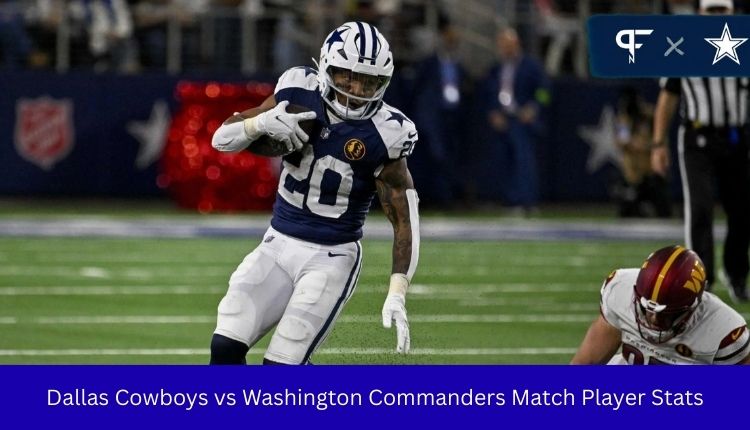
Whenever these two NFC East teams meet, fans expect physical football, tactical battles and outstanding individual performances. In this in-depth guide, we break down the Dallas Cowboys vs Washington Commanders match player stats, breaking down offensive production, defensive dominance, quarterback efficiency and game-changing moments. This article takes a deep dive into the player performances and statistical trends that shaped the outcome of the match, offering valuable insights for fans, analysts and fantasy football enthusiasts alike.
- Dallas Cowboys vs. Washington Commanders
- Dallas Cowboys vs Washington Commanders match player stats and analysis
- Washington Commanders offensive player stats breakdown
- Quarterback comparison based on player-of-the-match stats
- Defensive Player Stats: Dallas Cowboys Dominance
- Washington Commanders defensive player stats and impact
- Special Teams and Player Support Contributions
- Final Thoughts
- Frequently asked questions
Dallas Cowboys vs. Washington Commanders
The Dallas Cowboys vs Washington Commanders match player stats highlight a contest full of momentum changes and strategic execution. Both teams entered the game with clear game plans, and the stats show how effectively those plans were executed on the field. Dallas relied heavily on a balanced offence and defensive pressure, while Washington focused on a fast-paced passing game and disciplined coverage.
From the opening drive, the Dallas Cowboys vs Washington Commanders match player stats, maintaining long possessions and converting critical third downs. Washington responded with aggressive defensive schemes designed to disrupt timing and force turnovers. Overall player stats reflect this chess match and show strengths and weaknesses on both sides of the ball.
Key stats include total yards gained, time of possession, red zone efficiency and turnover margin. These numbers help paint a complete picture of how individual players contributed to the team’s success or how they struggled under pressure. Player of the match stats also reveal how deep players have stepped up at key moments, often changing the course of the game.
The most important statistical data from the match:
- Total offensive yards compared between the two teams
- Third down conversion efficiency
- Turnover differential and its impact
- Touch percentage in the red zone
By examining these metrics, fans will gain a deeper understanding of how the Cowboys were able to control the tempo and how the quarterbacks attempted to counter with defensive adjustments. This statistical overview forms the basis for a more detailed analysis of the performances of individual players.
Dallas Cowboys vs Washington Commanders match player stats and analysis
The stats of the Dallas Cowboys vs Washington Commanders match player stats demonstrate a well-rounded offence that mixes the pass and rush effectively. The quarterback led the offence with a precise passing game, distributing the ball among multiple receivers and maintaining a high completion percentage. His ability to read defences and make quick decisions was reflected in his passing and touchdown efficiency.
The running game also played a key role in Dallas’ offensive success. The primary running back consistently found gaps in Washington’s defensive front, contributing significant rushing yards and controlling time. This balanced offensive approach forced the Commander to respect both the run and the pass and opened up opportunities for big plays.
The wide receivers and tight ends performed reliably, especially on third downs. Their route discipline and yards after the catch added extra pressure on Washington’s secondary. The offensive line stats further underscore Dallas’ dominance with fewer sacks allowed and strong pass protection throughout the game.
Notable offensive statistics for the Cowboys include:
- Quarterback passing yards, touchdowns, and completion rate
- Rushing yards per carry by a lead running back
- Receiving yards and targets among the top receivers
- Effectiveness of sack prevention by the offensive line
Overall, the Dallas Cowboys vs Washington Commanders match player stats reveal a unit operating in sync. Each position group fulfilled its responsibilities, leading to sustained effort and scoring opportunities. This offensive efficiency played a major role in determining the outcome of the game.
Washington Commanders offensive player stats breakdown
The stats of the Dallas Cowboys vs Washington Commanders match player stats of offensive linemen tell a story of resilience and adaptability. Despite facing a stout Cowboys defence, the Washington quarterback was able to create a consistent passing game over short and intermediate throws. His quick release and pocket awareness helped minimise negative plays, even under heavy pressure.
The Chiefs’ fast-paced attack showed flashes of effectiveness, particularly in the second half. The running backs used outside runs and screen passes to counter Dallas’ aggressive pass rush. Although the rushing yardage total was lower than Dallas’, Washington used creative play to keep drives alive.
Wide receivers have been vital to Washington’s offensive production. Their ability to find weak spots in zone coverage led to several first-down conversions. The tight ends also contributed as reliable safety valves, especially on third downs and in red zone situations.
Washington’s key offensive metrics include:
- Quarterback pass attempts, yards and touchdowns
- Rushing attempts and yards gained by running backs
- Receiving yards and catch rate of top receivers
- Third-ranked offensive efficiency
While Washington’s offence has faced challenges, player stats highlight moments of execution and individual brilliance. These performances kept the game competitive and showed the offensive potential of the Commanders despite the adversity.
Quarterback comparison based on player-of-the-match stats
Quarterback comparisons are essential to understanding the Dallas Cowboys vs Washington Commanders match player stats. The two quarterbacks approached the game with different styles, and their statistical outputs reflect those differences. The Dallas quarterback emphasized accuracy and ball security, resulting in efficient shots and minimal turnovers.
Washington’s quarterback, on the other hand, focused on quick decision-making and mobility. His passing stats show solid yardage accumulation, although when under pressure, he has struggled to maintain consistency. The contrast between the two quarterbacks highlights how offensive philosophies affected the flow of the game.
Key quarterback metrics such as completion percentage, passer rating and throw time provide insight into performance under pressure. Dallas benefited from strong offensive line protection, which allowed their quarterback to explore the field with ease. Washington’s quarterback often had to rely on quick reads due to defensive pressure.
Quarterback stats comparisons include:
- Passing yards and touchdowns
- Completion percentage and passenger rating
- Bags taken and time in your pocket
- Third-party pass-through efficiency
Ultimately, the quarterback stats reveal why Dallas has maintained control at critical moments. While both quarterbacks showed skill, Dallas’ efficiency and decision-making proved decisive.
Defensive Player Stats: Dallas Cowboys Dominance
The stats of the Dallas Cowboys vs Washington Commanders match player stats show a unit that consistently disrupted Washington’s offence. The defensive line generated pressure throughout the game, resulting in multiple sacks and hurried throws. This pressure significantly impacted Washington’s passing efficiency.
Linebackers played a vital role in run defence and pass coverage. Their tackling efficiency and ability to read plays limited Washington’s yards after contact. The secondary complemented that effort by breaking up passes and limiting explosive plays down the field.
Another highlight of Dallas’ defensive performance was turnover creation. The interception and forced fumble shifted the momentum and gave the offence advantageous field position. Those defensive stats underscore the Cowboys’ ability to capitalise on Washington’s mistakes.
Key stats for Dallas’ defence include:
- Total sacks and quarterback pressures
- Tackles a loss and stops the run
- Pass deflections and interceptions
- Forced fumbles and recoveries
Dallas’ defensive stats reflect discipline, speed and coordination. The performance of this unit was crucial in controlling the tempo and securing victory.
Washington Commanders defensive player stats and impact
Washington Commanders’ defensive stats highlight moments of resilience despite the Dallas Cowboys vs Washington Commanders match player stats. The defensive line recorded key pressures and stops, especially in short-yardage situations. Their ability to limit big plays kept the game within reach during crucial stretches.
Linebackers contributed strong tackle and coverage responsibilities. They successfully disrupted passing lanes and limited yards after the catch. The secondary has shown solid abilities in coverage, recording a pass breakup and preventing a deep completion.
While Washington’s defence has spent significant time on the field, its stats show effort and adaptability. The red zone defence in particular improved as the game progressed, forcing field goal attempts instead of touchdowns.
Highlights of Washington’s defence include:
- Defensive and solo solutions
- Sacks and quarterback hits
- Pass breakups and coverage efficiency
- Defensive performance in the red zone
These stats show that Washington’s defence fought hard despite being under constant pressure. Individual performances stood out and provided a basis for future improvement.
Special Teams and Player Support Contributions
Special teams often go unnoticed, but the Dallas Cowboys vs Washington Commanders match player stats reveal their importance. Kickers, punters, and return specialists influenced field position and scoring opportunities throughout the game. Dallas’s kicker showed reliability with accurate field goal conversions and added valuable points.
The punting stats highlight the battle for field position. Effective punts pushed opponents deep, forced long drives, and increased defensive success. The return units contributed solid yardage gains and created favourable starting positions for the offence.
Support players, such as backup receivers and rotation backs, have also made significant contributions. Their snaps added depth and maintained performance levels during rotation and fatigue.
Special teams and support stats include:
- Field accuracy and extra points
- Average and net yardage
- Kickoff and punt return yards
- Coverage effectiveness
These contributions may not dominate the headlines, but their impact is clearly reflected in the overall match statistics.
Final Thoughts
The Dallas Cowboys vs Washington Commanders match player stats analysis provides a comprehensive understanding of how the game unfolded. Dallas’ balanced offence and aggressive defence proved decisive, while Washington displayed resilience and individual talent despite the challenges.
The stats highlight efficiency, discipline and execution as key factors in Dallas’ success. Washington’s numbers reveal potential and areas for growth, especially when it comes to offensive consistency and defensive stamina.
For fans and analysts, these player statistics offer valuable information about the team’s strengths and weaknesses and future matches. This rivalry continues to deliver compelling football, and each statistical breakdown adds depth to the ongoing narrative.
Frequently asked questions
Question 1: Why are the Dallas Cowboys vs Washington Commanders game statistics important?
These statistics help fans understand individual and team performances and reveal how the game was won or lost.
Q2: Who had the better offensive performance in the match?
The Dallas Cowboys have shown greater offensive efficiency based on passing accuracy, rushing balance and scoring opportunities.
Question 3: How did the defence affect the outcome of the game?
Dallas’ defence created pressure and turnovers that shifted the momentum significantly in their favour.
Q4: Were special teams important in this game?
Yes, special teams contributed to field position control and reliable scoring.
Question 5: Based on the statistics, what can Washington improve?
Improving offensive consistency and limiting defensive time on the field could improve future performances.